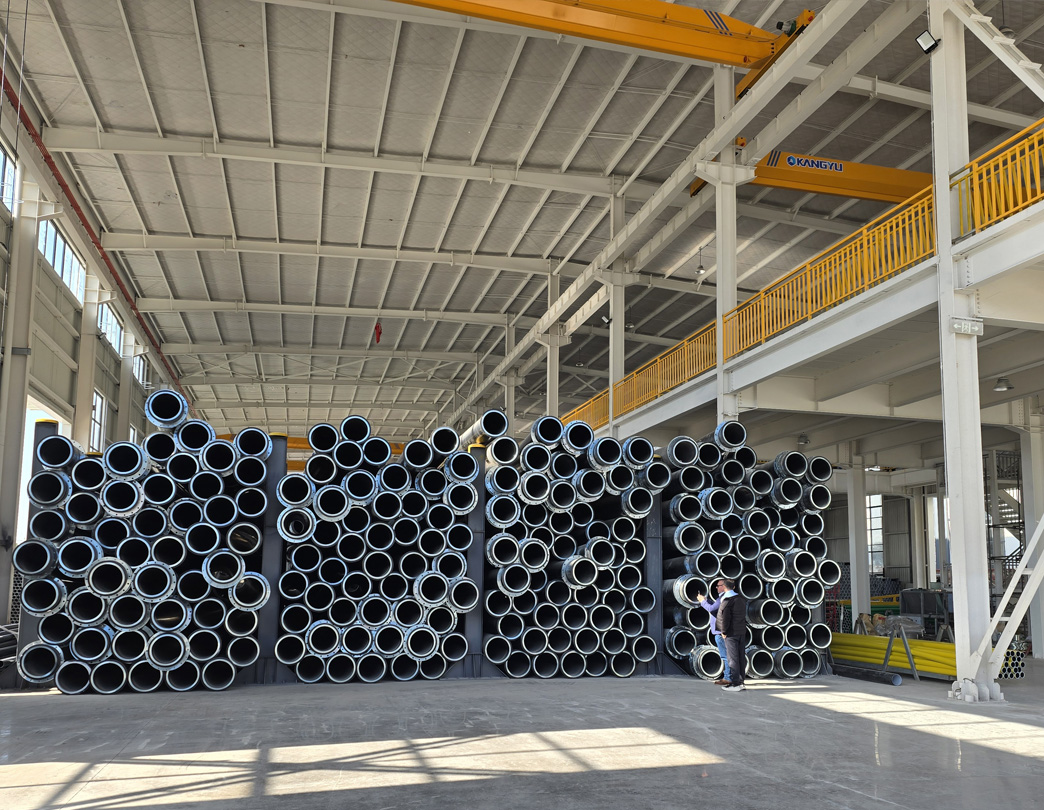

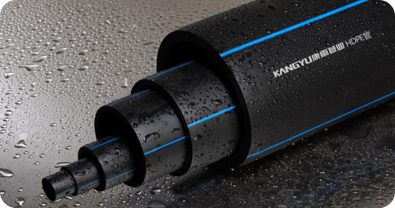
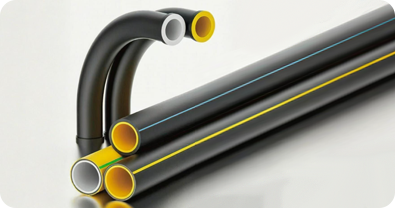
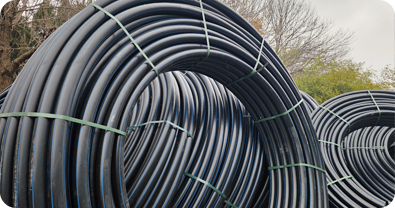
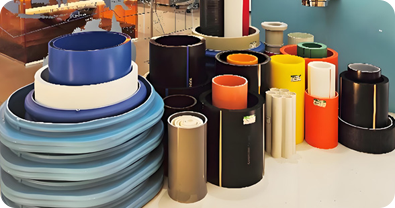
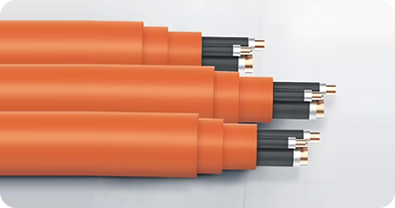
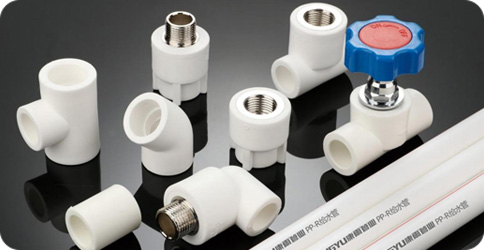
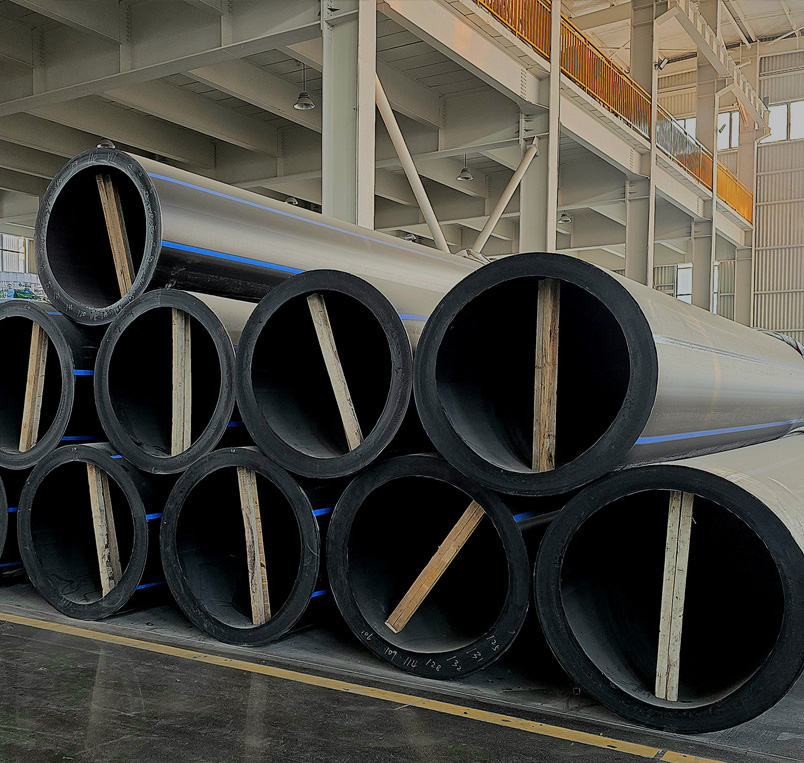
HDPE nuclear power plant supporting pipelines are nuclear safety grade special high-density polyethylene pipelines, which are produced with PE100/PE4710 nuclear grade special materials, and strictly implement GB/T 40967-2021, NB/T 20722-2024, ASME BPVC III and other nuclear grade standards. They are specially used for safety-related water delivery systems such as important plant water, equipment cooling water, service water, fire water, and seawater cooling in pressurized water reactor nuclear power plants.
The pipe has super seawater/chloride ion corrosion resistance, no scaling, no microbial growth, anti-radiation aging, anti-seismic and anti-settlement characteristics; the inner wall is smooth, the flow resistance is small, the water transmission efficiency is high, the hydrostatic design stress is less than or equal to 6.9 MPa, and it is suitable for high-pressure thick-wall specifications such as SDR7/SDR9/SDR11 to meet the harsh working conditions of nuclear power.
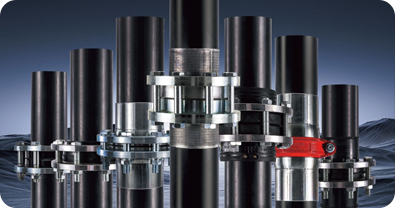
The connection adopts hot-melt docking/electrofusion connection, and the interface strength is higher than that of the pipe body. The whole process is evaluated + appearance inspection + hydraulic pressure test + non-destructive testing to ensure zero leakage and high reliability. It is lightweight, does not require corrosion protection, and is easy to construct. It is widely used in nuclear power plant cooling water systems, safety-related water transportation, and supporting public works. It is the preferred pipeline for nuclear safety and environmental protection instead of metal pipes.
Stable and resistant to radiation, suitable for special working conditions of nuclear power plants
Specially modified HDPE, resistant to gamma/neutron radiation, stable performance in long-term irradiation environment; complies with IAEA nuclear facility material specifications, ISO 11346, ASTM G155.
Resistant to chemical corrosion and strong media compatibility
It has excellent chemical inertness and is resistant to cooling media, acid and alkali cleaning agents, and demineralized water; it complies with ISO 4433, EN 12573, and RCC‑M French nuclear power equipment specifications.
Wide temperature range use, excellent thermal stability
Applicable temperature -40℃~60℃, resistant to temperature alternating impact; complies with GB/T 13663.2, ASME B31.12 nuclear power non-metallic pipeline standards.
High toughness, impact resistance, earthquake resistance and foundation displacement resistance
Elongation at break ≥800%, flexible, resistant to settlement and earthquake deformation; complies with IAEA‑TECDOC‑1347 Nuclear Power Seismic Design, EN 1046.
High pressure, reliable, long-term hydrostatic performance
Pressure-bearing PN0.6–PN1.6MPa, resistant to internal and external pressure; complies with ISO 4427, GB/T 13663, and KTA German nuclear power safety regulations.
Hot melt integrated connection, zero leakage and high safety
Hot melt/electrofusion connection, interface strength ≥ pipe body; complies with DVS 2207, EN 12814, RCC‑P nuclear power pipeline construction specifications.
Insulated and anti-static to meet nuclear power explosion-proof safety
Non-metallic insulating material, no static electricity accumulation; complies with IEC 60079, NFPA 77, GB 12476 explosion-proof and anti-static standards.
Clean and non-toxic, ensuring safe media transportation
No heavy metal precipitation, suitable for desalted water and pure water systems; complies with NSF/ANSI 61, ISO 10993, EJ/T 2008 nuclear non-metallic material requirements.
Ultra-long service life and low operation and maintenance costs
The design life is ≥50 years and requires no anti-corrosion maintenance; it complies with the IAEA nuclear facility service life guidelines and GB 50235 nuclear power pipeline engineering specifications.